
Northern Vietnam is a region of dramatic landscapes, rich cultural heritage and centuries of history. From the mountains and terraced rice fields of the north to the vibrant streets of Hanoi and the peaceful waters of Ha Long Bay, every journey reveals a different side of Vietnam. Discover remote villages, local traditions, historic cities and breathtaking scenery through experiences shaped around the way you want to travel.
Explore Northern Vietnam through its historic capital, dramatic landscapes and quieter destinations beyond the classic routes.
Northern Vietnam is shaped by some of the country’s most spectacular landscapes. Cruise through the limestone karsts and emerald waters of Ha Long Bay, explore the terraced valleys of Sapa and venture into the mountains of the northern highlands. From the summit of Fansipan to the peaceful waterways and limestone scenery of Ninh Binh, the region offers countless opportunities to experience Vietnam through nature, hiking and rural life.
Northern Vietnam is home to diverse communities, traditions and ways of life. Experience the energy of Hanoi, where ancient temples, historic neighbourhoods and French colonial architecture meet modern Vietnamese life. In the northern mountains, discover local markets, traditional crafts and the cultures of communities including the Hmong, Tay and Dao peoples. Travelling through these regions offers opportunities to meet local people and experience traditions that remain closely connected to the land.
Northern Vietnam is also where many layers of the country’s history come together. Explore Hanoi’s Imperial Citadel and the Temple of Literature, visit Hoa Lu, the ancient capital of Vietnam, and discover historic temples, villages and monuments across the region. Combined with Hanoi’s streets, traditional architecture and everyday life, these places offer a deeper understanding of Vietnam’s past and the people who shaped it.
Northern Vietnam can be visited throughout the year, but the experience varies considerably between the mountains, Hanoi and the coast. Spring and autumn generally offer comfortable conditions for exploring, while the mountain regions have their own seasonal highlights.
Mild temperatures and greener landscapes make spring a pleasant time for exploring Hanoi, Ninh Binh and the northern countryside.
Clearer skies and cooler temperatures make autumn particularly appealing for travelling through Hanoi, Ha Long Bay and the northern mountains.
Winter can be cool and misty in the north, especially in the mountains, while summer brings warmer temperatures and heavier rainfall.
From vibrant Hanoi and dramatic mountain landscapes to peaceful valleys and local communities, Northern Vietnam offers countless ways to explore. Tell us what you would like to discover, and we’ll help create a journey around the places and experiences that interest you.
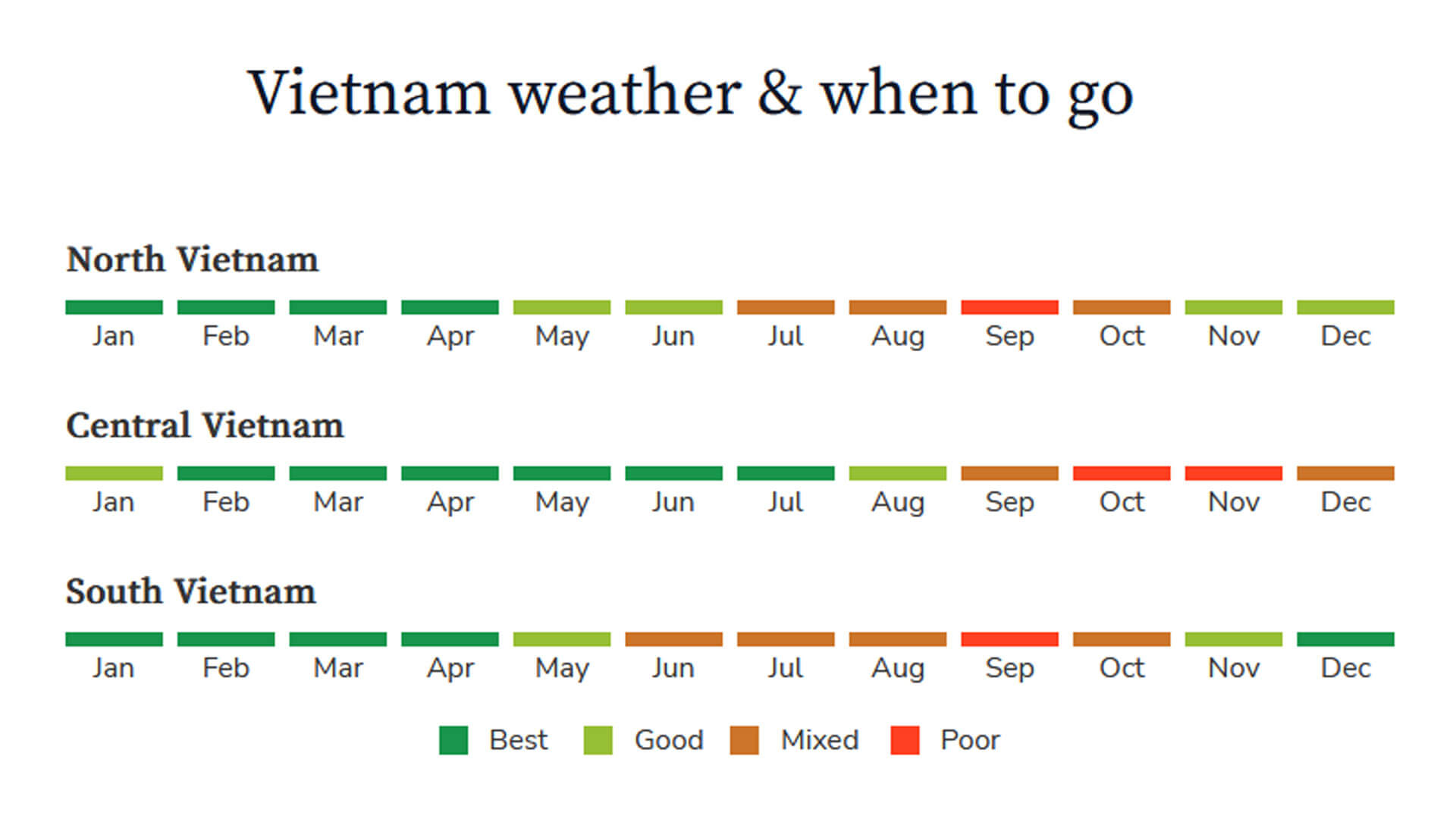
If you want to visit Vietnam, you might be wondering what the weather is like in different months. Well, it depends on where you go and what you want to do. Vietnam has a diverse climate, so there is no one-size-fits-all answer. But don’t worry, I’ll give you a general overview of what to expect in each month, based on the average weather patterns. You can also check out the holidays and events that happen in each month in Vietnam.
January
This is a good month to enjoy the dry and pleasant weather in most parts of Vietnam, except for the north. The north can get quite cold, especially in the morning and evening. You might need some warm clothes and jackets if you go to places like Sapa and Ha Giang. If you’re looking for some beach time, head to Phu Quoc, where the sun is always shining. Just be aware that Halong Bay can be foggy this month, so you might not see the best views.
February
The weather gets warmer in most of Vietnam, except for the north, which still feels chilly. This is a high season for tourism, so expect more crowds and higher prices. But it’s also a great time to experience the TET festival, which is the Vietnamese New Year. It’s a big celebration with lots of food, fireworks, and fun. Just keep in mind that many shops, museums, and restaurants are closed for about a week during TET.
March
This is one of the best months to visit Vietnam, as the weather is fantastic everywhere. You have more options for beach destinations, such as Mui Ne, Con Dao, and Nha Trang. Hoi An is also a lovely place to enjoy the beach and the old town. This is also a great time to visit Halong Bay, which should have clear blue skies and no fog.
April
Like March, April is another great month to visit Vietnam, with amazing weather everywhere. This is also a high season for tourism, so be prepared for more crowds and higher prices.
May
The weather gets hotter in May, but it’s still a good time to visit Vietnam before the rainy season starts. You might get some rain in the north and south by the end of the month, but nothing too serious. You can also take advantage of the lower prices after the high season.
June
You might get some rain in the north and south of Vietnam, but it’s usually not too bad. You can still enjoy the sunny days in Hanoi, Mai Chau, and Halong Bay. The best place to be is in central Vietnam, where the weather is still dry and sunny. You can relax on the beaches of Lang Co and Hoi An, or explore the countryside and culture. This is also a good time to travel before the school holidays start next month.
July
Central Vietnam is still the best place to be in July, with lots of sunshine and little rain. The rest of Vietnam might have some showers, but they won’t ruin your fun.
August
Central Vietnam is still a good place to visit in August, although you might get some more rain by the end of the month. The rest of Vietnam might also have some rain, but it’s not too bad. You can also enjoy some discounts on flights and hotels during the low season.
September
This is a good month to catch the last sun on the central coast of Vietnam before it gets too rainy. The north and south are usually very wet this month, but you can still find some bargains on hotels.
October
The weather gets better in the north of Vietnam in October, and this is a great time to visit places like Sapa or Ha Giang. You can admire the stunning scenery of rice terraces, valleys, and mountains that change color with the seasons. You can also hike, bike, or stay with the local people who live there. This is not a good month for beach lovers, but Vietnam has so much more to offer than just beaches. And traveling in October means you avoid the crowds.
November
The high season starts again in November, as many people come to Vietnam for the cooler winter months in the north. By the end of the month, most of Vietnam is hot and dry again, except for the central region, which might have some rain.
December
There is still a chance of rain in the central part of Vietnam in December; however, most of Vietnam is hot and dry again. The beach season starts again on Phu Quoc island. You should book early for Christmas time, as it can get very busy.