


Discover Con Dao with our 4-Day Eco-Tour – a perfect blend of nature, wildlife, and history.


Discover Con Dao with our 4-Day Eco-Tour – a perfect blend of nature, wildlife, and history. Snorkel vibrant coral reefs, take part in turtle conservation, trek through lush rainforests, and explore Con Dao’s famous prisons and pristine beaches. With full transport, local guides, and unforgettable experiences, this 4 Days 3 Nights eco-adventure connects you to the island’s unique marine, forest, and cultural heritage.
Tour guide will pick you up at 36 Ton Duc Thang Street
Please arrive at the designated tourist port by yourself at least 10 minutes before departure. Be ready for a 4-day tour sea adventure at Con Dao Island.
Snorkel to explore vibrant coral reefs
Upon arriving at Bay Canh Island, enjoy snorkeling in its crystal-clear waters, where vibrant coral reefs and a rich array of marine life await. The island offers one of the best spots for underwater exploration, perfect for both beginners and nature lovers.
While snorkeling, you’ll also hear the story of how El Niño has affected the marine ecosystem. Your guide will explain how rising sea temperatures have led to coral bleaching, disrupted marine biodiversity, and challenged the health of reef systems—giving you a deeper appreciation for the fragile beauty beneath the waves.
Tour Bay Canh Island
Explore the island while gaining in-depth insights into its sea turtle conservation program—a meaningful journey connecting nature, wildlife, and community-based efforts.
You’ll visit the sea turtle incubation area, where eggs are carefully monitored and protected throughout their development. Your guide will explain the challenges faced in sea turtle
conservation, including threats from climate change, pollution, and human activity, as well as the specific steps taken to safeguard these endangered species.
During the experience, you’ll:
The journey also takes you into the mangrove forests that fringe the island—a vital ecosystem that protects coastlines, filters water, and provides habitat for countless aquatic species.
Dinner at the Hon Bay Canh ranger station
Evening Wildlife Observation
A Rare Moment – Witness Sea Turtle Nesting
Release more baby turtles into the ocean
Release Baby Turtles into the Ocean In the early morning, you may have the special opportunity to join a baby sea turtle release, helping the hatchlings make their first journey into the ocean under the soft light of dawn. This experience depends on natural hatching cycles, so if the eggs happened to hatch the day before, you’re in luck — it's a rare and unforgettable chance to witness the very beginning of a sea turtle’s life. All releases are conducted under the supervision of conservation staff to ensure the safety of the turtles and minimize human impact on their natural behavior.
Return to the port
After the turtle release, return to the port, concluding your enriching experience on Bay Canh Island. Have breakfast and back to hotel.
Have breakfast
A hearty breakfast will be served upon arrival. The rest of the morning is yours to rest and refresh in preparation for an afternoon of rainforest discovery.
Lunch at Local Restaurant
Enjoy a flavorful meal at a local restaurant featuring island cuisine. It's the perfect fuel for the afternoon's adventure.
Visit the Environmental Education Center
Begin with a guided visit to the Environmental Education Center, where immersive exhibits and interpretive panels introduce you to the park’s ecosystems:
Release more baby turtles into the ocean
Release Baby Turtles into the Ocean In the early morning, you may have the special opportunity to join a baby sea turtle release, helping the hatchlings make their first journey into the ocean under the soft light of dawn. This experience depends on natural hatching cycles, so if the eggs happened to hatch the day before, you’re in luck — it's a rare and unforgettable chance to witness the very beginning of a sea turtle’s life. All releases are conducted under the supervision of conservation staff to ensure the safety of the turtles and minimize human impact on their natural behavior
Specimen Gallery: Observe rare preserved specimens of native wildlife, including sea turtles, crabs, and endemic flora.
Trekking into the Rainforest
Follow your guide deep into the lush primary forest, walking along moss-covered trails. As you trek, discover:
Flora Highlights: Encounter the unique "Bam Bam" vine, a climbing plant found only in Con Dao.
The 400-Year-Old Nhội Tree
Conclude the journey at the sacred Nhội Heritage Tree—a living witness to centuries of history, now recognized as a national treasure. With its massive roots and towering branches, the tree embodies the resilience and beauty of Con Dao’s natural world.
17:00
Return to the hotel for dinner and well-deserved rest.
Have breakfast at the hotel.
A Journey Through History
After breakfast at the hotel, delve into the island's dramatic past:
Explore the Con Dao Prison System, a historical site that reflects the island’s turbulent past. This visit offers insight into the harsh conditions endured by prisoners and the resilience of those who fought for independence.
Walk in the footsteps of history and learn about the courage of those who endured hardship for their beliefs.
Lunch at a local restaurant. Return to the hotel for rest.
Nature & Freedom
Spend your afternoon reconnecting with nature and the sea. Relax on:
Dam Trau Beach: Con Dao’s top sunset viewpoint, overlooking the romantic Lovers’ Peak. Capture the golden hour at a cozy seaside café or simply sit back and let the moment unfold.
Enjoy a flavorful dinner at a local restaurant. Evening is free for leisure—take a beach walk, sip a cocktail, or reflect on the moving stories and stunning views of your journey.
Morning is free for personal exploration, souvenir shopping, or one last walk along the serene coastline.
Check out and conclude the journey
Contac us
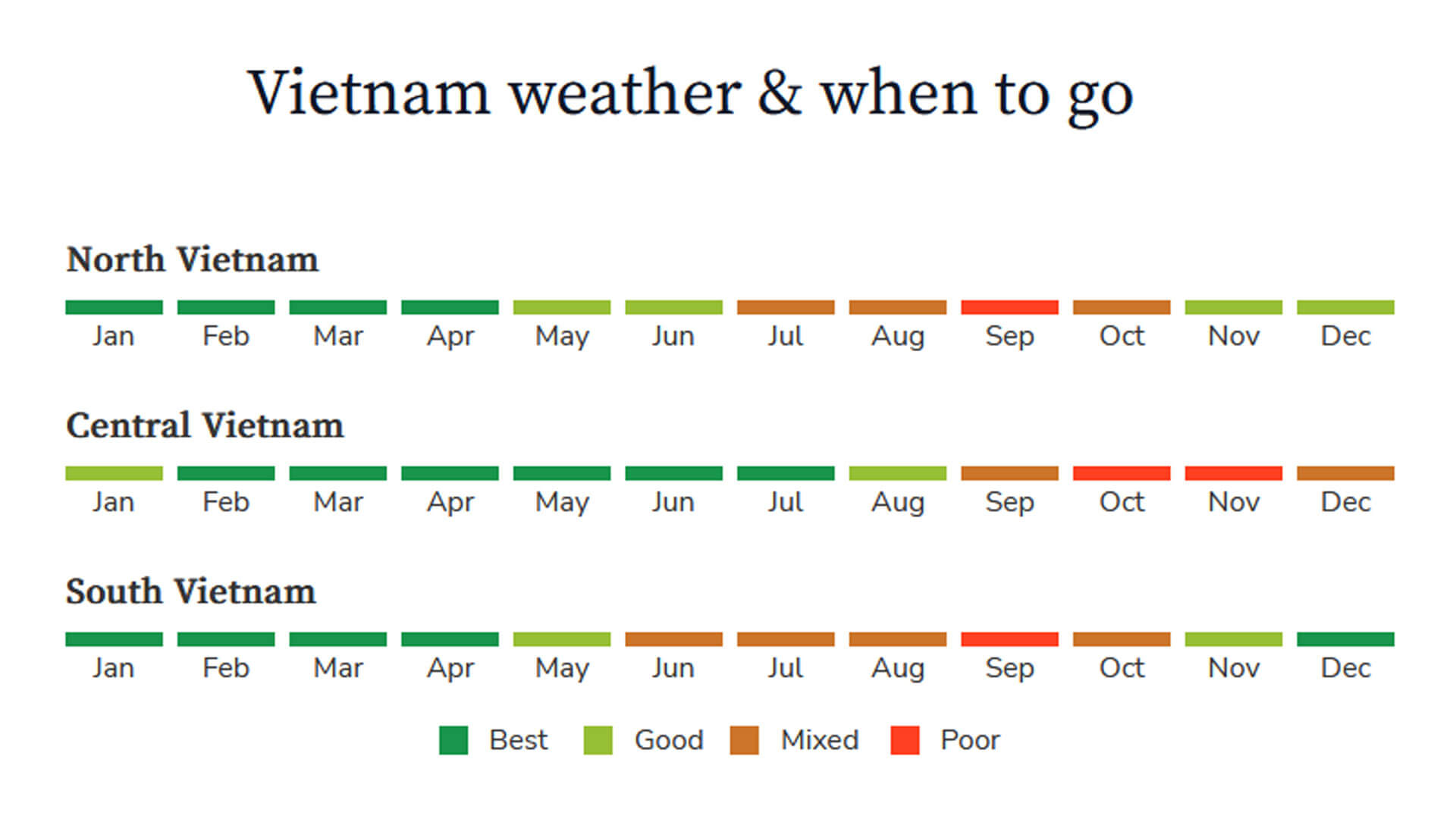
Si vous souhaitez visiter le Vietnam, vous vous demandez peut-être quel temps il fait à chaque mois. Cela dépend de l'endroit où vous allez et de ce que vous voulez faire. Le Vietnam a un climat varié, il n'y a donc pas de réponse universelle. Mais ne vous inquiétez pas, je vais vous donner un aperçu général de ce à quoi vous pouvez vous attendre chaque mois, en fonction des conditions météorologiques moyennes. Vous pouvez également consulter les jours fériés et les événements qui se déroulent chaque mois au Vietnam.
Janvier
C'est un bon mois pour profiter du climat sec et agréable de la plupart des régions du Vietnam, à l'exception du nord. Le nord peut être assez froid, surtout le matin et le soir. Vous aurez peut-être besoin de vêtements chauds et de vestes si vous vous rendez dans des endroits comme Sapa et Ha Giang. Si vous cherchez à passer du temps à la plage, rendez-vous à Phu Quoc, où le soleil brille toujours. Sachez simplement que la baie d'Along peut être brumeuse ce mois-ci, vous ne pourrez donc peut-être pas profiter des plus belles vues.
Février
Le temps se réchauffe dans la majeure partie du Vietnam, à l'exception du nord, où il fait encore froid. C'est la haute saison touristique, alors attendez-vous à plus de monde et à des prix plus élevés. Mais c'est aussi le moment idéal pour vivre le festival du TET, qui est le Nouvel An vietnamien. C'est une grande fête avec beaucoup de nourriture, de feux d'artifice et de divertissement. Gardez simplement à l'esprit que de nombreux magasins, musées et restaurants sont fermés pendant environ une semaine pendant le TET.
Mars
C'est l'un des meilleurs mois pour visiter le Vietnam, car le climat est fantastique partout. Vous avez plus de choix pour les destinations balnéaires, telles que Mui Ne, Con Dao et Nha Trang. Hoi An est également un endroit charmant pour profiter de la plage et de la vieille ville. C'est également le moment idéal pour visiter la baie d'Along, qui devrait avoir un ciel bleu clair et sans brouillard.
Avril
Comme mars, avril est un autre mois idéal pour visiter le Vietnam, avec un climat magnifique partout. C'est aussi la haute saison touristique, alors préparez-vous à plus de monde et à des prix plus élevés.
Peut
Le temps devient plus chaud en mai, mais c'est toujours une bonne période pour visiter le Vietnam avant le début de la saison des pluies. Vous pourrez avoir un peu de pluie dans le nord et le sud d'ici la fin du mois, mais rien de trop grave. Vous pouvez également profiter des prix plus bas après la haute saison.
Juin
Il peut pleuvoir un peu dans le nord et le sud du Vietnam, mais ce n'est généralement pas trop grave. Vous pouvez toujours profiter des journées ensoleillées à Hanoi, Mai Chau et dans la baie d'Along. Le meilleur endroit pour séjourner est le centre du Vietnam, où le temps est encore sec et ensoleillé. Vous pouvez vous détendre sur les plages de Lang Co et Hoi An, ou explorer la campagne et la culture. C'est également une bonne période pour voyager avant le début des vacances scolaires du mois prochain.
Juillet
Le centre du Vietnam reste le meilleur endroit où séjourner en juillet, avec beaucoup de soleil et peu de pluie. Le reste du Vietnam pourrait connaître quelques averses, mais elles ne gâcheront pas votre plaisir.
Août
Le centre du Vietnam reste une destination agréable à visiter en août, même si vous pourrez peut-être profiter d'un peu plus de pluie d'ici la fin du mois. Le reste du Vietnam pourrait également connaître des précipitations, mais ce n'est pas trop grave. Vous pouvez également profiter de réductions sur les vols et les hôtels pendant la basse saison.
Septembre
C'est un bon mois pour profiter des derniers rayons de soleil sur la côte centrale du Vietnam avant qu'il ne pleuve trop. Le nord et le sud sont généralement très humides ce mois-ci, mais vous pouvez toujours trouver des hôtels à prix avantageux.
Octobre
En octobre, le climat s'améliore dans le nord du Vietnam, et c'est le moment idéal pour visiter des endroits comme Sapa ou Ha Giang. Vous pourrez admirer les magnifiques paysages de rizières en terrasses, de vallées et de montagnes qui changent de couleur au fil des saisons. Vous pouvez également faire de la randonnée, du vélo ou séjourner chez les habitants locaux. Ce n'est pas un bon mois pour les amoureux de la plage, mais le Vietnam a bien plus à offrir que des plages. Et voyager en octobre signifie éviter la foule.
Novembre
La haute saison commence à nouveau en novembre, car de nombreux Vietnamiens viennent profiter des mois d'hiver plus frais dans le nord du pays. À la fin du mois, la majeure partie du Vietnam est à nouveau chaude et sèche, à l'exception de la région centrale, où il peut pleuvoir un peu.
Décembre
Il y a encore des risques de pluie dans la partie centrale du Vietnam en décembre, mais la majeure partie du pays est à nouveau chaude et sèche. La saison des plages recommence sur l'île de Phu Quoc. Il est conseillé de réserver tôt pour la période de Noël, car elle peut être très fréquentée.