
South Vietnam beckons with a captivating mix of bustling cities, pristine beaches and captivating historical sites. Stretching from the bustling metropolis of Ho Chi Minh City to the idyllic beaches of Phu Quoc Island, this dynamic region promises an unforgettable adventure for every traveler.
Immerse yourself in urban energy
Ho Chi Minh City
Explore the heart of South Vietnam in Hô Chi Minh-Ville, a city full of energy. Marvel at the Notre-Dame Cathedral and the Central Post Office, architectural gems from the colonial era. Visit the War Remnants Museum for a poignant look at Vietnam’s history. Immerse yourself in the bustling Ben Thanh market, brimming with local crafts, souvenirs and delicious street food.
Can Tho:
Embark on a captivating journey through the Mekong Delta to Can Tho, the “capital of the West”. Cruise along the Mekong on a traditional boat, discovering floating markets and charming villages. Explore the lush floating market of Cai Rang, a bustling shopping center where vendors sell everything from fresh produce to local handicrafts.
Relax on pristine beaches
Phu Quoc Island: Escape to paradise on Phu Quoc Island, a paradise for beach lovers. Relax on the pristine sands of Long Beach or explore the island’s hidden coves and secluded bays. Treat yourself to water sports activities such as diving, snorkeling and kayaking. Discover the island’s natural beauty at Phu Quoc National Park, a UNESCO World Heritage Site.
Mui Ne: For a touch of adventure, head to Mui Ne, a popular destination for kitesurfing and windsurfing. Explore the supernatural landscapes of white sand dunes and Fairy Creek. Relax on the picturesque beaches and soak up the sun.
Beyond the coast: historical gems and cultural delights
Cu Chi Tunnels: dive into the Cu Chi Tunnels, a network of underground passages used by the Viet Cong during the war. Gain a deeper understanding of Vietnam’s history and the ingenuity of its people.
Tay Ninh province: explore the Cao Dai temple, a unique religious structure that blends elements of Caodaism, Buddhism, Confucianism and Christianity. Attend colorful ceremonies and immerse yourself in the spiritual traditions of the Cao Dai religion.
Dalat: Nicknamed the “City of Eternal Spring”, Dalat offers a refreshing escape from the heat. Explore French colonial architecture, stroll around picturesque Xuan Huong Lake and visit Dalat’s flower gardens, brimming with vibrant blooms.
Discover the ideal time to visit South Vietnam
South Vietnam has a tropical climate with distinct wet and dry seasons. The ideal time to visit depends on what you prioritize:
Pleasant climate and outdoor activities: Dry season (December to April): This is the peak tourist season, offering sunshine and comfortable temperatures, perfect for exploring cities, beaches and historic sites. However, expect larger crowds and potentially higher prices.
Fewer people and comfortable temperatures (southern Mekong Delta): Intermediate seasons (May, September – November): these months offer a good balance between sunshine and manageable rain showers. The weather is warm with lower humidity, making sightseeing in the Mekong Delta comfortable. It’s also generally less crowded and potentially cheaper.
Magic all year round
South Vietnam offers a captivating experience all year round. The rainy season (May to September) brings lush greenery and fewer people, while the dry season (December to April) offers sunshine and perfect beach weather.
Let Viettourist create your dream escape in South Vietnam
Whether you’re looking for vibrant cityscapes, pristine beaches, historical exploration or cultural encounters, South Vietnam has something to offer every traveler. Let Viettourist create the perfect itinerary for you and unlock the magic of this vibrant and captivating region.
Southern Vietnam is a region of contrasts, where vibrant cities meet peaceful waterways, tropical islands and rich cultural traditions. Discover the energy of Ho Chi Minh City, explore life along the Mekong Delta and experience the diverse landscapes that make the south such a fascinating part of Vietnam.
The Mekong Delta reveals a slower side of southern Vietnam, shaped by rivers, rice fields, orchards and local communities. Journey to Can Tho and explore the waterways by boat, waking early to experience the lively Cai Rang Floating Market as local vendors trade fresh produce from their boats. Venture beyond the markets to discover peaceful villages, lush countryside and everyday life along the Mekong.
Southern Vietnam offers plenty of opportunities to slow down by the sea. Relax on the sandy beaches of Phu Quoc, explore the island’s forests and coastline, or head to Mui Ne for its striking sand dunes and adventurous coastal atmosphere. From peaceful island escapes to kitesurfing and other water activities, the southern coast offers a natural complement to Vietnam’s cultural discoveries.
Beyond the cities and coastline, southern Vietnam offers fascinating places to discover the country’s history and cultural diversity. Explore the Cu Chi Tunnels and learn about Vietnam’s wartime history, visit the colourful Cao Dai Holy See in Tay Ninh, or travel to Da Lat in the Central Highlands, where cooler temperatures, pine forests and French colonial influences create a very different atmosphere.
From the energy of Ho Chi Minh City and the waterways of the Mekong Delta to tropical islands, coastal landscapes and peaceful highlands, Southern Vietnam offers many different ways to experience the country. Tell us what you would like to discover, and we’ll help create a journey around the places and experiences that interest you.
South Vietnam has a tropical climate with distinct dry and rainy seasons. While the region can be visited throughout the year, the best time to travel depends on the destinations and experiences you want to include.
The dry season generally brings sunnier weather and lower rainfall, making it a popular period for exploring Ho Chi Minh City, the Mekong Delta, Phu Quoc and the southern coast. These months are particularly suitable for sightseeing, boat trips and beach holidays, although popular destinations can be busier.
The rainy season brings short, often intense showers and greener landscapes across much of southern Vietnam. Rain does not necessarily last all day, and travelling during this period can offer a quieter experience. The Mekong Delta is especially lush, while Phu Quoc can still be enjoyed depending on local weather conditions.
These months continue to see rainfall in parts of the region, but they can be a good option for travellers looking for fewer visitors and a more relaxed pace. Weather conditions vary between destinations, so a flexible itinerary can help make the most of your journey.
For sunshine and beach holidays: December to April generally offers the driest conditions.
For lush landscapes and a quieter atmosphere: May to November can be rewarding, particularly for travellers who don’t mind occasional rain.
For a multi-destination journey: Consider the specific regions you plan to visit, as weather conditions can vary across Southern Vietnam.
From the vibrant streets of Ho Chi Minh City and the waterways of the Mekong Delta to the beaches of Phu Quoc and the highlands of Da Lat, Southern Vietnam offers countless ways to explore. Tell us what you would like to discover, and we’ll help create a journey around the places and experiences that interest you.
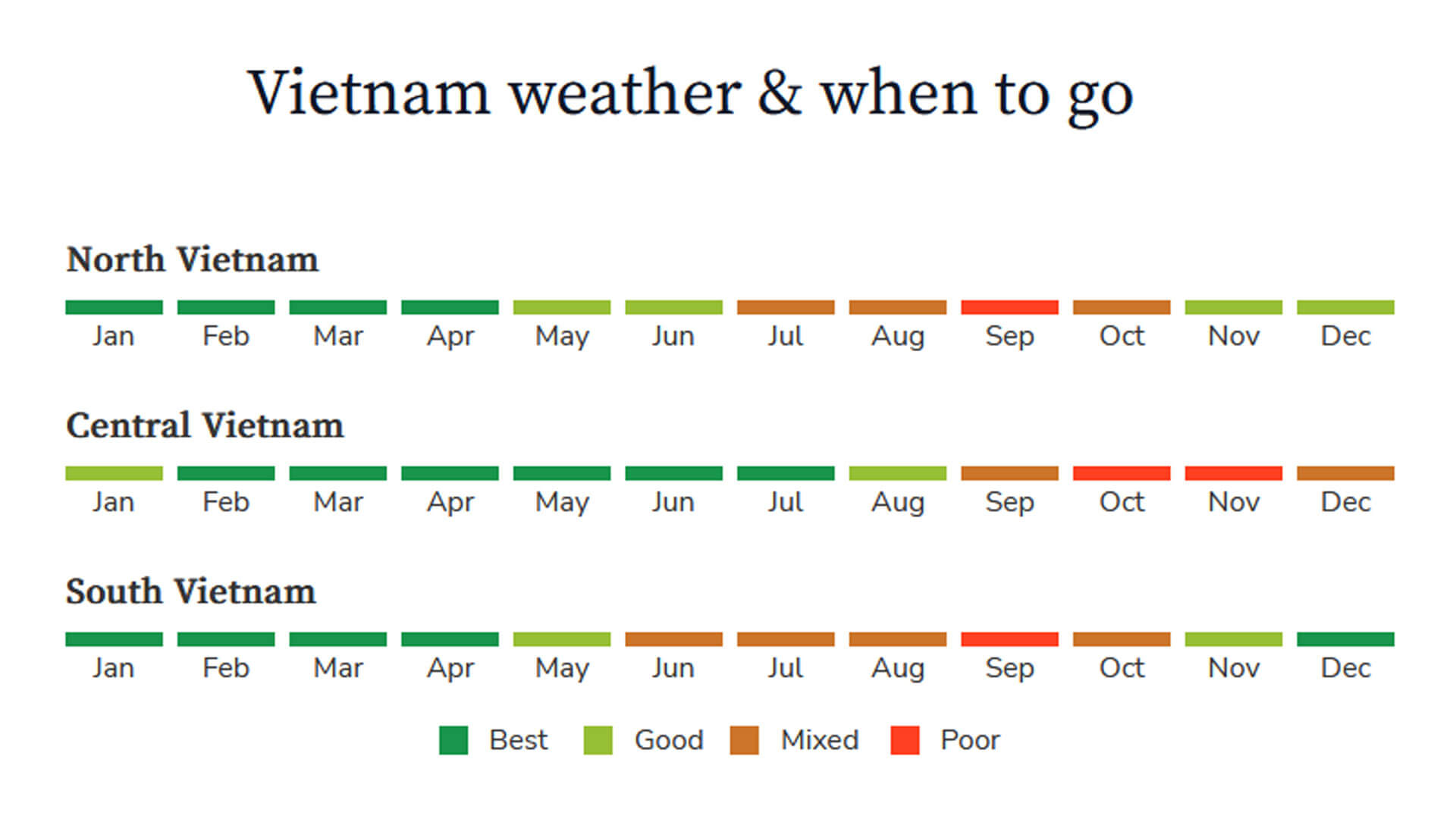
If you want to visit Vietnam, you might be wondering what the weather is like in different months. Well, it depends on where you go and what you want to do. Vietnam has a diverse climate, so there is no one-size-fits-all answer. But don’t worry, I’ll give you a general overview of what to expect in each month, based on the average weather patterns. You can also check out the holidays and events that happen in each month in Vietnam.
January
This is a good month to enjoy the dry and pleasant weather in most parts of Vietnam, except for the north. The north can get quite cold, especially in the morning and evening. You might need some warm clothes and jackets if you go to places like Sapa and Ha Giang. If you’re looking for some beach time, head to Phu Quoc, where the sun is always shining. Just be aware that Halong Bay can be foggy this month, so you might not see the best views.
February
The weather gets warmer in most of Vietnam, except for the north, which still feels chilly. This is a high season for tourism, so expect more crowds and higher prices. But it’s also a great time to experience the TET festival, which is the Vietnamese New Year. It’s a big celebration with lots of food, fireworks, and fun. Just keep in mind that many shops, museums, and restaurants are closed for about a week during TET.
March
This is one of the best months to visit Vietnam, as the weather is fantastic everywhere. You have more options for beach destinations, such as Mui Ne, Con Dao, and Nha Trang. Hoi An is also a lovely place to enjoy the beach and the old town. This is also a great time to visit Halong Bay, which should have clear blue skies and no fog.
April
Like March, April is another great month to visit Vietnam, with amazing weather everywhere. This is also a high season for tourism, so be prepared for more crowds and higher prices.
May
The weather gets hotter in May, but it’s still a good time to visit Vietnam before the rainy season starts. You might get some rain in the north and south by the end of the month, but nothing too serious. You can also take advantage of the lower prices after the high season.
June
You might get some rain in the north and south of Vietnam, but it’s usually not too bad. You can still enjoy the sunny days in Hanoi, Mai Chau, and Halong Bay. The best place to be is in central Vietnam, where the weather is still dry and sunny. You can relax on the beaches of Lang Co and Hoi An, or explore the countryside and culture. This is also a good time to travel before the school holidays start next month.
July
Central Vietnam is still the best place to be in July, with lots of sunshine and little rain. The rest of Vietnam might have some showers, but they won’t ruin your fun.
August
Central Vietnam is still a good place to visit in August, although you might get some more rain by the end of the month. The rest of Vietnam might also have some rain, but it’s not too bad. You can also enjoy some discounts on flights and hotels during the low season.
September
This is a good month to catch the last sun on the central coast of Vietnam before it gets too rainy. The north and south are usually very wet this month, but you can still find some bargains on hotels.
October
The weather gets better in the north of Vietnam in October, and this is a great time to visit places like Sapa or Ha Giang. You can admire the stunning scenery of rice terraces, valleys, and mountains that change color with the seasons. You can also hike, bike, or stay with the local people who live there. This is not a good month for beach lovers, but Vietnam has so much more to offer than just beaches. And traveling in October means you avoid the crowds.
November
The high season starts again in November, as many people come to Vietnam for the cooler winter months in the north. By the end of the month, most of Vietnam is hot and dry again, except for the central region, which might have some rain.
December
There is still a chance of rain in the central part of Vietnam in December; however, most of Vietnam is hot and dry again. The beach season starts again on Phu Quoc island. You should book early for Christmas time, as it can get very busy.