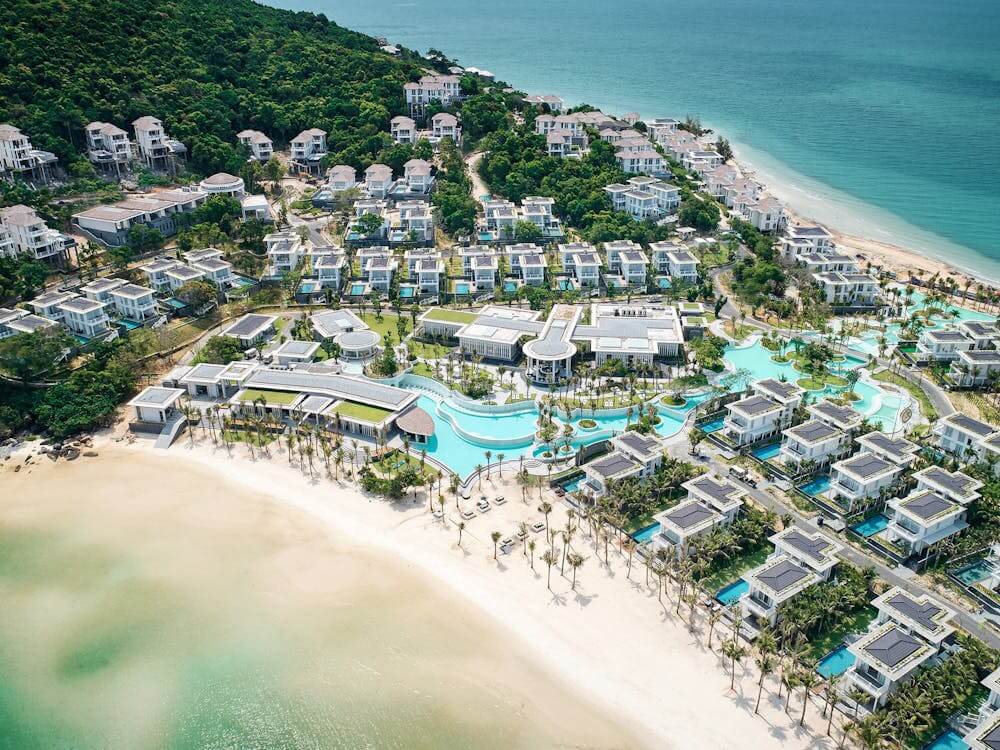
Vietnam Bordered by coast and magnificent beaches, it is perfect for relaxation and enjoying seaside leisure activities. Known for its food and its landscapes, Vietnam is today turning towards a high-end, luxury hotel offering. Aside from the large hotel chains already present, very luxurious brands have established themselves in Vietnam. In this article we will discover the 10 most luxurious and eco-friendly resorts in Vietnam. These hotels have banned plastic from their establishments, have installed solar panels and have their own water and waste treatment systems. These resorts are also involved in the local community and support the economy. The employees are from the region and the products used come exclusively from local villages and farmers. We can speak of a limited environmental footprint because even the construction was made with local materials. Relax as close as possible to nature while maintaining a refined and quality setting.
1. Zannier Hotels Bai San Ho
Location: Phu Yen Province
Overview: Nestled in the serene coastal region of Phu Yen, Zannier Hotels Bai San Ho is an epitome of sustainable luxury. The resort is designed to blend seamlessly with its natural surroundings, utilizing traditional Vietnamese architecture and sustainable materials. Developed by Arnaud Zannier, a man passionate about art and antiques, he thought of each room of this hotel. An exceptional place to feel immersed between nature and tradition. This hotel was built only with local materials. It is very close to nature and exceptional refinement. One word “WOW”.
Accommodation: The resort offers 73 villas spread across three distinct areas – Hill Pool Villas, Beach Pool Villas, and Paddy Field Villas. Prices range from $500 to $1500 per night.
Dining: Guests can savor authentic Vietnamese cuisine at Bà Hai, or organize a private dinner at Nhà Ở, or enjoy fresh seafood at Làng Chài. The resort emphasizes locally sourced, organic ingredients.
2. Anantara Quy Nhon Villas
Location: Quy Nhon
Overview: Anantara Quy Nhon Villas is a sanctuary of peace and luxury. This eco-friendly resort features private pools and offers a stunning view of the South China Sea. Sustainability initiatives include using solar energy and local materials.
Accommodation: The resort offers 26 one and two-bedroom villas. Prices range from $600 to $2000 per night, depending on the season and villa type.
Dining: Sea. Fire. Salt is the resort’s signature restaurant, offering an array of fresh seafood and steaks. For a more intimate experience, Dining by Design allows guests to create their bespoke dining experience in unique locations around the resort.
3. Banyan Tree Lang Co
Location: Lang Co Bay
Overview: Situated in the tranquil Lang Co Bay, Banyan Tree Lang Co is renowned for its eco-friendly practices. The resort is surrounded by lush mountains and pristine beaches, making it an idyllic retreat.
Accommodation: The resort offers 62 villas with private pools, blending traditional Vietnamese and modern design. Prices range from $700 to $2500 per night.
Dining: Guests can enjoy a variety of dining options including Saffron, offering Thai cuisine with a Vietnamese twist, and The Water Court, which serves international dishes with a focus on fresh, local ingredients.
4. Regent Phu Quoc
Location: Phu Quoc Island
Overview: Regent Phu Quoc is a luxurious eco-resort located on the beautiful Phu Quoc Island. The resort prioritizes sustainability with initiatives like rainwater harvesting and energy-efficient systems.
Accommodation: The resort features 176 suites and 126 villas, each with a private pool. Prices range from $400 to $3000 per night.
Dining: Regent Phu Quoc offers six dining venues including Rice Market, which serves Vietnamese and Chinese cuisine, and Oku, a Franco-Japanese restaurant. Ocean Club offers fresh seafood with a stunning beachfront view.
5. InterContinental Phu Quoc Long Beach Resort
Location: Phu Quoc Island
Overview: Located on the pristine Long Beach, this resort is designed to minimize environmental impact while maximizing guest comfort. The resort features eco-friendly architecture and sustainable practices.
Accommodation: The resort offers 459 elegant rooms, suites, and villas. Prices range from $250 to $2000 per night.
Dining: Guests can dine at Sora & Umi for Japanese and Vietnamese cuisine, Ombra for Italian dishes, or Lava for seafood delicacies. The resort uses locally sourced ingredients to support the community and reduce carbon footprint.
6. Six Senses Con Dao
Location: Con Dao Islands
Overview: Six Senses Con Dao is a pioneer in sustainability, set in the pristine Con Dao archipelago. The resort is committed to environmental preservation and community development. An exceptional place in communion with nature. It is closest to the sea and supports a turtle nesting program, in fact it is not uncommon for you to see turtles and eggs. It positions itself as one of the pioneers in Vietnam in this range. A hotel out of the category, a place to discover. All the establishments have been designed in an eco-responsible manner.
Accommodation: The resort offers 50 villas, each with a private infinity pool and ocean views. Prices range from $700 to $3000 per night.
Dining: The resort offers several dining options including Vietnamese at By the Beach, Mediterranean at Dining on the Rocks, and international cuisine at The Market. Six Senses emphasizes organic and local produce.
7. Anantara Mui Ne Resort
Location: Mui Ne
Overview: Anantara Mui Ne Resort offers a luxurious escape with a strong commitment to sustainability. The resort integrates eco-friendly practices like waste reduction and energy conservation.
Accommodation: The resort features 90 rooms, suites, and villas with modern amenities and traditional Vietnamese touches. Prices range from $300 to $1500 per night.
Dining: L’Anmien Restaurant offers a fusion of Eastern and Western cuisine, while Thung serves fresh seafood by the beach. The Wine Room provides a unique dining experience with an extensive selection of wines.
8. Four Seasons Resort The Nam Hai
Location: Hoi An
Overview: This resort is set along the stunning coastline of Hoi An, offering luxury with a conscience. The resort focuses on sustainability through various initiatives including community outreach and environmental programs.
Accommodation: The resort offers 100 villas, including pool villas and family villas. Prices range from $600 to $3000 per night.
Dining: Café Nam Hai serves Vietnamese cuisine, La Sen offers a mix of Western and Asian dishes, and The Bar is perfect for light bites and cocktails. All restaurants focus on using local, sustainable ingredients.
9. Amanoi
Location: Nui Chua National Park, Vinh Hy Bay
Overview: Amanoi is a tranquil retreat set in the lush surroundings of Nui Chua National Park. The resort emphasizes ecological conservation and cultural preservation.
Accommodation: The resort offers 36 pavilions, villas, and residences, blending seamlessly with the natural environment. Prices range from $1000 to $5000 per night.
Dining: The Restaurant at Amanoi offers a range of Vietnamese and international dishes, with a strong emphasis on locally sourced ingredients. The Beach Club provides a casual dining experience with stunning ocean views.
10. JW Marriott Phu Quoc Emerald Bay Resort & Spa
Location: Phu Quoc Island
Overview: Designed by renowned architect Bill Bensley, this resort combines luxury with sustainability. The resort’s design reflects the island’s history and culture while promoting eco-friendly practices.
Accommodation: The resort offers 244 rooms, suites, and villas with unique architectural styles. Prices range from $350 to $2000 per night.
Dining: Tempus Fugit offers a blend of Vietnamese, Japanese, and French cuisine. Pink Pearl is a standout for fine dining with a French flair, while Red Rum focuses on fresh seafood. The resort emphasizes sustainable and local sourcing of ingredients.
Conclusion
Vietnam’s eco-friendly luxury resorts offer an unparalleled blend of opulence and sustainability, making them ideal for travelers seeking an indulgent yet responsible vacation. From the serene beaches of Phu Quoc to the lush landscapes of Con Dao, these resorts provide exceptional experiences while minimizing their environmental impact. Whether you’re looking for a romantic getaway, a family vacation, or a solo retreat, these resorts cater to every need with their unique charm and commitment to sustainability.
Choosing any of these ten eco-friendly luxury resorts ensures not only a memorable stay but also a positive contribution to preserving Vietnam’s natural beauty and cultural heritage. Embrace luxury with a conscience and explore the best of what Vietnam has to offer.
Do not hesitate to contact us to book your next stay in Vietnam. At Viettourist we support eco-responsible travel that is as close as possible to nature. We offer tours to reduce your impact, select means of transport such as the train and establishments that respect the environment.